

Research Skills: The Key to Effective Research and Academic Success
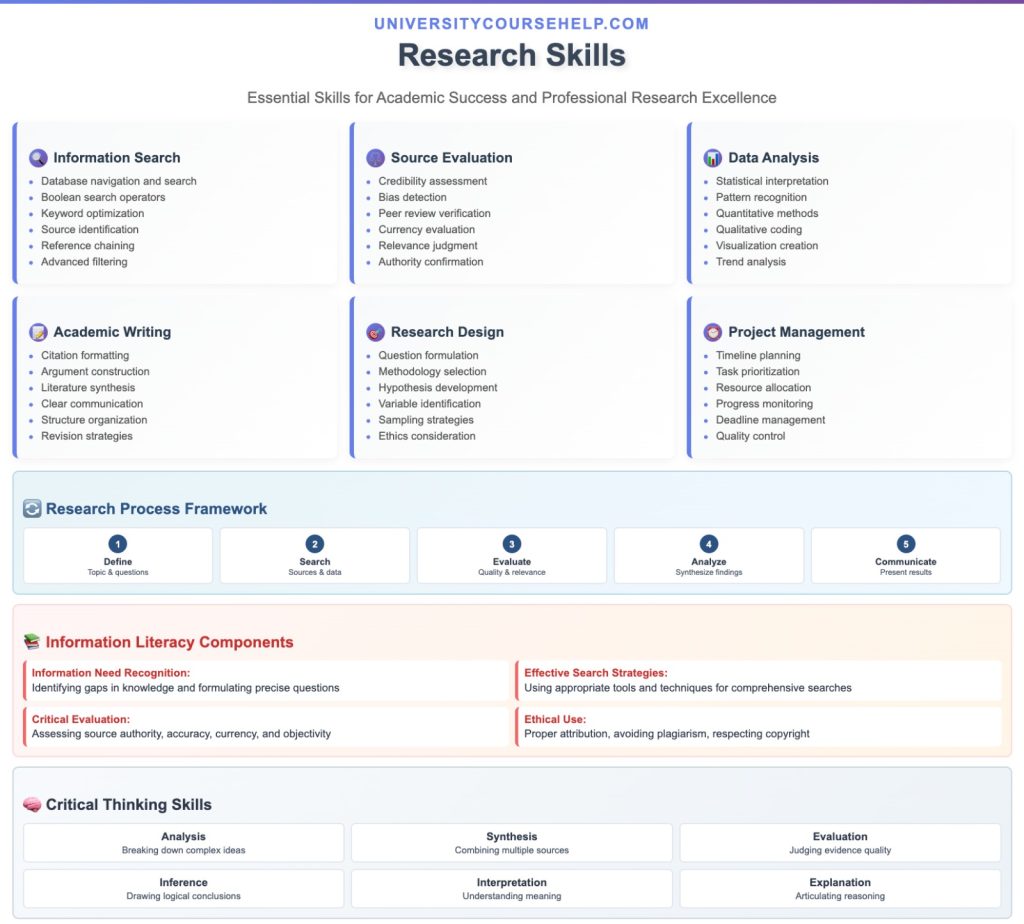
Research skills are critical for students and professionals across a variety of fields. Whether you’re writing an academic research paper, conducting market research, or diving into advanced research methodologies, your ability to gather, analyze, and interpret data plays a key role in achieving meaningful results. In this blog post, we’ll explore the importance of research skills, give examples of essential research skills, and discuss how to improve and use these skills for academic and professional success.
Research Skills Important: Why They Matter
Research skills are important because they enable you to gather relevant information, analyze it, and draw conclusions that contribute to knowledge in your field. Whether you’re working on an academic research project, solving complex problems, or conducting qualitative research, these skills are the foundation for making informed decisions.
When conducting research, it is essential to have good research skills to ensure that you are focusing on the right questions, gathering accurate data, and analyzing results correctly. The framework of research skills ranges from basic methods like note-taking to more advanced techniques like data analysis and statistical methods.
Use Research: Applying Skills to Solve Problems
Being able to use research effectively means applying the research skills you have acquired to solve problems, answer questions, and contribute to your field. Research can be used to explore specific research questions or to solve practical problems in market research or clinical research.
For instance, when solving problems, you need to use research skills such as data collection, analysis, and critical thinking to explore all possible solutions and gather relevant information. Whether you’re using qualitative research methods or quantitative research, knowing how to use research skills efficiently ensures your research is data-driven and grounded in reliable evidence.
Use Research Skills: Key to Organizing Your Study
Once you have acquired basic research skills, the next step is to use research skills to structure your study or project. For example, when researching for an academic paper, the research skills that help you organize your work might include:
- Time Management Skills: Balancing multiple tasks and deadlines during your research projects is crucial for staying on track.
- Critical Thinking: Identifying important research questions and evaluating the quality of sources ensures that your research is meaningful and valid.
- Data Analysis: Organizing, analyzing, and interpreting data to support your research findings.
These core skills not only help you succeed in academic research but also in a professional environment where research is required for decision-making and strategy development.
List Research Skills: The Essential Skills You Need
To be a successful researcher, there are various skills you need to master. Here’s a list of research skills that are essential for both academic research and professional studies:
- Critical Thinking: The ability to evaluate and synthesize research from multiple sources to draw meaningful conclusions.
- Data Collection: Knowing how to gather relevant data through surveys, interviews, and research tools like SPSS.
- Data Analysis: Using statistical and research tools to analyze and interpret collected data, ensuring accurate results.
- Time Management: Managing your time efficiently, especially when juggling multiple research projects with different deadlines.
- Problem-Solving: Identifying and addressing obstacles during the research process.
- Note-Taking: Writing down key points and important research findings from sources, especially during literature reviews.
- Communication Skills: Effectively sharing research results, whether in a research paper, presentation, or discussion.
These research skills are fundamental for success in academic research and beyond.
Research Skills Examples: Real-World Applications
Research skills examples help you understand how to apply your skills in real-world scenarios. For example:
- Market Research: Gathering data about customer preferences, analyzing buying behavior, and generating reports to help a company make informed decisions.
- Clinical Research: In the healthcare field, using qualitative research methods to understand patient experiences and data analysis to improve treatment outcomes.
- Academic Research: Writing a research paper on a topic in your field, where you gather relevant literature, analyze data, and draw conclusions based on valid research methods.
By applying research skills in different areas, you can contribute valuable insights and solve real-world problems.
Ready to Sharpen Your Research Skills?
Unlock the full potential of your research capabilities with UniversityCourseHelp.com! Whether you’re looking to enhance your academic research, improve your data analysis techniques, or master time management, we provide the resources and guidance you need to succeed.
Research Skills on Your Resume: Highlighting Your Abilities
Research skills on your resume are essential for showcasing your abilities to prospective employers. Including research skills in your resume will help demonstrate that you have the capability to handle data, solve problems, and contribute to research-driven projects. Key research skills to include on your resume might be:
- Data Analysis: Experience with tools like SPSS or Excel for interpreting and analyzing data.
- Qualitative Research: Experience in gathering and analyzing qualitative data through interviews, focus groups, or case studies.
- Research Methods: Knowledge of quantitative research techniques, including surveys, experiments, and statistical analysis.
- Problem-Solving: The ability to solve problems and make decisions based on research findings.
Including these skills can help add research skills to your resume, giving potential employers confidence in your research abilities.
Soft Skills Related to Research: Enhancing Your Research Abilities Require Research Skills
In addition to hard research skills, soft research skills are also important for success. These include:
- Time Management: Managing deadlines and research tasks efficiently.
- Communication: The ability to clearly articulate research findings, both in writing and verbally.
- Adaptability: Being able to adjust to new methods, tools, or changes in the research process.
These soft skills complement your technical abilities and make you more effective when conducting research or leading research projects.
Improve Research Skills: Strategies for Development
To improve research skills, it’s important to practice regularly, stay updated with new research methodologies, and learn from both your successes and mistakes. Here are some strategies to improve research skills:
- Practice Critical Thinking: Challenge assumptions and think critically about the information you gather.
- Use Research Tools: Familiarize yourself with new tools that can help you collect and analyze data more efficiently.
- Stay Organized: Use tools like note-taking apps and data collection templates to keep your research organized and efficient.
- Seek Feedback: Get feedback from peers or mentors on your research approach and findings to continually improve.
Regularly improving research skills will enhance your ability to conduct effective, reliable, and credible research.
Academic Research: Mastering Skills for Successful Studies
Academic research requires strong research skills to ensure the study is thorough, accurate, and credible. Research skills help you gather the right information, critically assess sources, and apply proper research methods to answer research questions. The ability to gather relevant information and analyze it effectively is crucial for conducting effective research. Whether you’re writing a research paper or developing an academic project, these skills are fundamental for success.
Roles Where Research Skills Are Required
Research skills are crucial for various roles in both academia and industry. Many careers, especially those related to research, require the ability to design studies, analyze data, and present research findings. For example, roles in clinical research, market research, and data analysis all demand research skills. These skills refer to the ability to conduct research, gather data, and analyze information to make informed decisions that influence business strategy or academic progress.
Top Research: Achieving Excellence with Strong Research Skills
The best research is built upon strong research skills. To produce top research, you need to have a clear research methodology, the ability to analyze data effectively, and strong critical thinking. By honing these skills, you can produce high-quality research findings that contribute meaningfully to your field. Research skills such as data analysis, time management, and the ability to gather relevant information can help elevate your research to the next level. Top research often involves carefully considering multiple sources, applying appropriate tools, and ensuring that the study is valid and reliable.
Research Skills and Tips: Enhancing Your Research Abilities
Improving research skills can take time, but with practice and focus, you can enhance your ability to conduct thorough and meaningful research. Research skills often include critical thinking, time management, data collection, and analysis. Key research skills to develop include note-taking during the literature review phase, applying appropriate research methods like qualitative or quantitative research, and learning how to assess the credibility of sources. By consistently applying these skills to your research projects, you’ll improve your research quality and efficiency.
By developing these skills, you will not only be able to conduct high-quality research, but you will also improve your ability to make informed decisions in your professional or academic life. Whether you are using research skills for academic research or other fields related to research, mastering these skills can make you more effective in your role.
Research Tools: Key Resources for Researchers
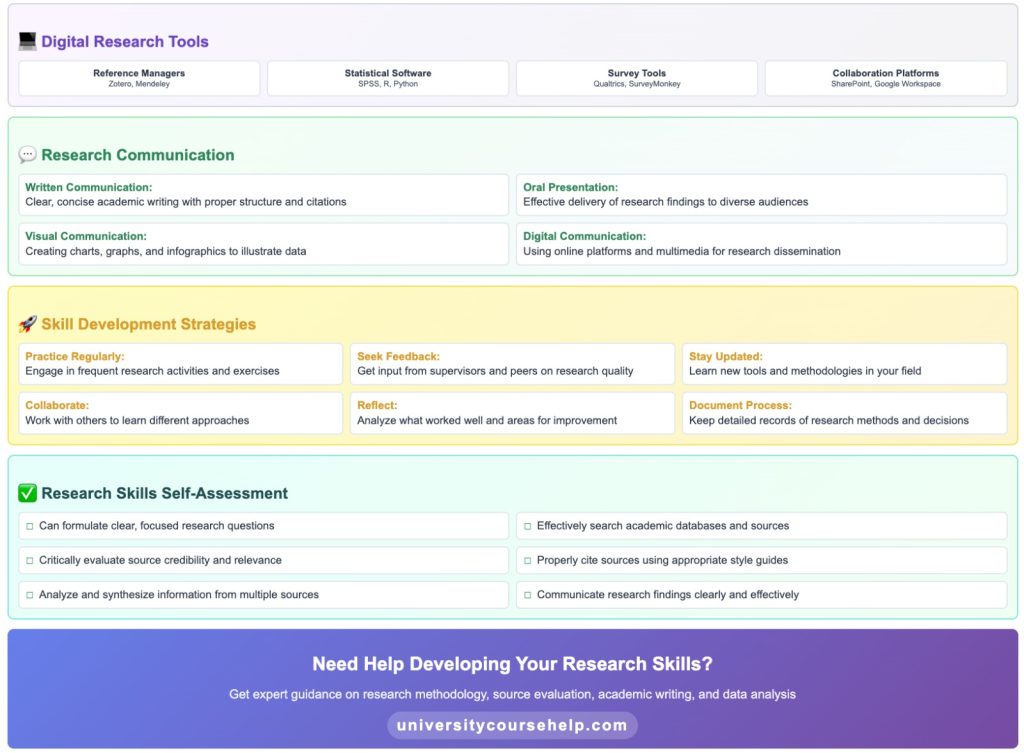
Research tools play a crucial role in enhancing your research skills. Tools like SPSS for data analysis, Qualtrics for surveys, and Zotero for managing references can help streamline the research process. These research tools are used to gather, organize, and analyze data, ensuring that your research methodology is accurate and efficient.
Knowing how to use research tools effectively is an important part of research skills, whether you’re conducting qualitative research or quantitative research.
Advanced Research: Taking Your Skills to the Next Level
For those looking to take their research skills to the next level, advanced research involves mastering complex methods and tools. This might include:
- Conducting systematic literature reviews.
- Using advanced statistical analysis techniques to interpret large datasets.
- Applying mixed methods (a combination of qualitative research and quantitative research).
Mastering advanced research allows you to tackle more complex research projects and solve intricate problems in your field.
By building and improving research skills, you can tackle a wide variety of research tasks, from data collection and analysis to problem-solving and research design. Whether you’re a student or a professional, these skills are essential for success in academic research, market research, or any field that requires data-driven decision-making. Incorporating research skills into your resume, using research tools, and applying effective research methods can boost your career and ensure the success of your research projects.
Start Improving Your Research Skills Today! and take your research capabilities to the next level!
FAQs about Essential Research Skills: A Complete Guide
1. What Are the Skills of Researching?
Researching involves a variety of essential skills that allow researchers to gather, evaluate, and synthesize information. Some of the core skills of researching include:
- Critical Thinking: The ability to analyze and evaluate research findings in a clear, logical, and objective manner. It helps you assess whether the research methods and conclusions are sound.
- Data Collection: The ability to gather relevant data from multiple sources using research tools like surveys, interviews, or SPSS for quantitative data.
- Time Management: Efficiently managing time to meet research deadlines and balance multiple research tasks is a crucial skill for academic research and market research projects.
- Communication Skills: Both written and oral communication skills are crucial for sharing research findings, whether it’s writing a research paper, presenting your findings, or discussing research methodologies with peers.
- Problem-Solving: Research involves solving problems by identifying gaps in knowledge and finding ways to address them through appropriate research methodologies.
These skills are essential for conducting effective research, making informed decisions, and ensuring the academic success of your research projects.
2. What Are the Big 6 Research Skills?
The Big 6 research skills are key research skills that every researcher should master. They include:
- Task Definition: Defining theresearch question and understanding the purpose of your research. This step is crucial for determining what information is relevant.
- Information Seeking: Gathering relevant information from a variety of sources like academic journals, books, databases, and interviews.
- Location and Access: Using research tools to access data from multiple sources, including libraries, databases, or internet searches.
- Use of Information: Organizing and synthesizing the information you’ve gathered to answer the research question and support your research findings.
- Synthesis: Combining the information from multiple research studies and sources into a cohesive argument or conclusion.
- Evaluation: Assessing the quality and validity of the information collected to ensure it’s credible, relevant, and supports the research question.
These research skills are essential for effective problem-solving and for ensuring that your research is thorough, accurate, and relevant.
3. How Do I Say I Have Research Skills?
When discussing research skills on your resume or in an interview, be specific about how you’ve applied them in real-life situations. You can say:
- “I have strong critical thinking skills and have used them to analyze complex data sets during my market research projects.”
- “I have experience conducting research in qualitative and quantitative research methodologies, including data analysis and data collection.”
- “I effectively manage my time to handle multiple research projects, ensuring timely delivery of research findings.”
In addition, be sure to include concrete examples of how you have applied research skills in previous roles or academic research projects. Listing these skills in your resume’s skills section or resume summary will help potential employers recognize your research capabilities.
4. What Are the Five Qualities of a Good Researcher?
Being a good researcher requires a combination of various qualities. Here are five key qualities of a good researcher:
- Curiosity: A good researcher is always looking to expand knowledge by asking insightful research questions and seeking relevant information.
- Attention to Detail: Good research requires close attention to detail, whether it’s collecting data, analyzing results, or reviewing research methods. Small mistakes can have a large impact on your research findings.
- Critical Thinking: The ability to think analytically and question assumptions is an essential research skill. It helps you assess the quality of research, detect biases, and make sound judgments about the data.
- Time Management: Effective time management is key in handling multiple research tasks and meeting deadlines. Good researchers must balance various phases of the research process, from planning to writing up results.
- Strong Communication Skills: The ability to clearly communicate research findings is essential for sharing results with others, whether it’s writing a research paper, giving presentations, or explaining complex concepts to a broader audience.
Research skills are essential for researchers, whether you’re in clinical research, academic research, or market research. Mastering these skills can improve your ability to conduct research effectively and make well-informed decisions.

