

Methods in Behavioral Research: A Comprehensive Guide
Behavioral research is a key part of understanding human behavior and the various factors that influence it. Whether you are studying psychology, sociology, or another field within the social sciences, knowing methods in behavioral research is crucial to conducting valid, reliable, and insightful studies. In this blog post, we will delve into the methods in behavioral research, explore the core concepts, and provide examples to help you better understand this essential area of study.
What Are Methods in Behavioral Research?
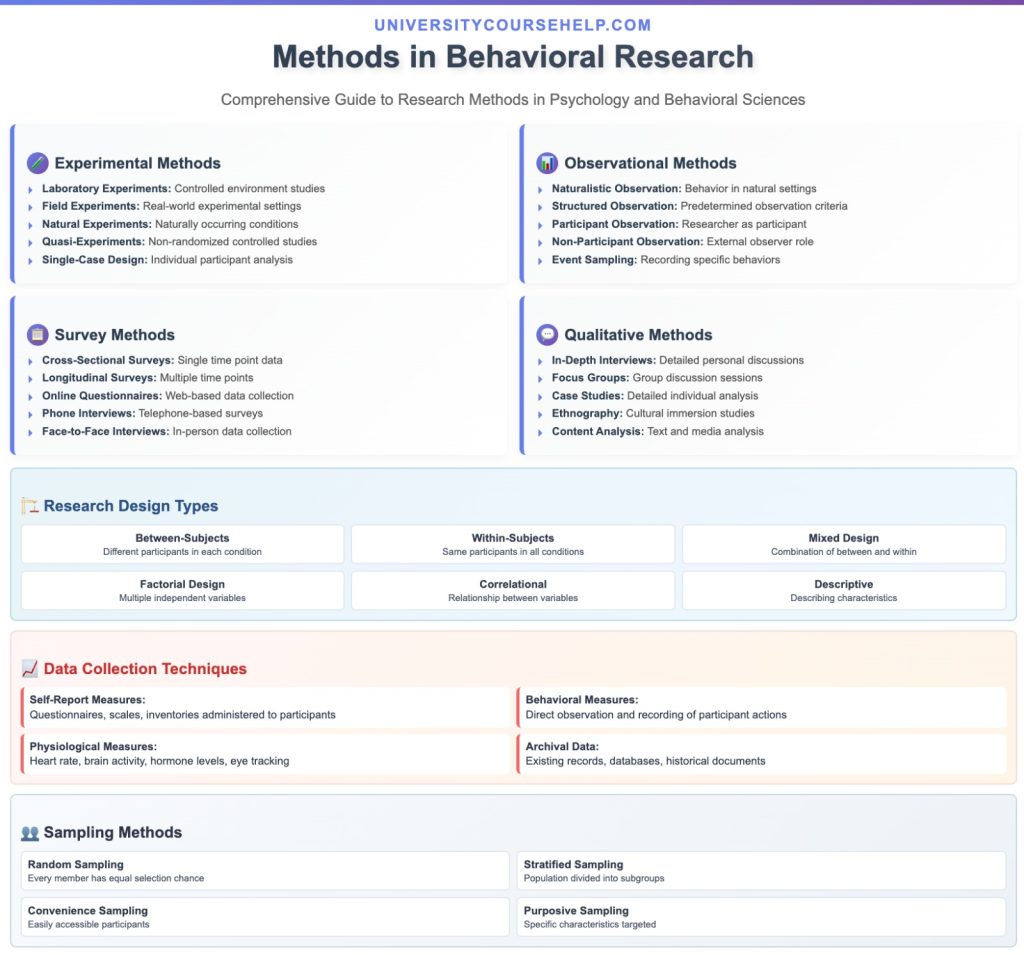
Methods in behavioral research refer to the systematic approaches used by researchers to investigate the behaviors of individuals, groups, or animals. These methods include a variety of tools and techniques to collect data, analyze results, and draw conclusions about how and why behavior occurs. The most common research methods in the field are experimental research, observational studies, correlational research, and survey-based methods.
For example, experimental research involves manipulating one or more variables to observe their effect on behavior, while observational studies involve watching and recording behavior without influencing it. Correlational research looks at the relationship between variables, while survey-based methods gather data directly from people through questions and surveys.
These research methods are discussed in detail in textbooks like “Methods in Behavioral Research” by Paul C. Cozby and Scott Bates. Their work provides a structured approach to understanding and applying these methods in real-world research.
Author: Paul C. Cozby and Scott Bates
The field of behavioral research owes much to scholars like Paul C. Cozby and Scott Bates, who have significantly contributed to our understanding of research methods. Their textbook “Methods in Behavioral Research” offers a comprehensive and accessible guide to behavioral science research methods. These authors have driven the development of foundational concepts that support students’ learning by breaking down complex research techniques into easy-to-understand sections.
The textbook explains experimental designs, data collection techniques, and analysis methods, all of which are critical for conducting quality research. Whether you are a student at Utah State University, the University of California, or another institution, their work provides the tools you need to succeed in behavioral science.
Textbook: Methods in Behavioral Research
The textbook “Methods in Behavioral Research” provides students with essential knowledge about how to approach methodological decision-making in behavioral science. It is often used in universities across the world, including at institutions like Utah State University and University of Minnesota, to teach students the basic and advanced methods in behavioral research.
With detailed explanations and practical examples, this textbook covers the foundational concepts and supports students’ understanding of how behavioral research is conducted. It drives home the importance of choosing the correct research method and applying it appropriately to study human or animal behavior in controlled and natural settings.
Overview: Behavioral Research Methods and Their Importance
An overview of behavioral research methods reveals the variety of approaches available to study behavior. From experimental methods to descriptive research methods, researchers have a range of options when designing their studies.
Methods in behavioral research are often classified into:
- Experimental Methods: These involve manipulating variables to see how changes affect behavior. This is the most controlled method and provides the most reliable results for establishing causal relationships.
- Observational Methods: Researchers watch and record behavior as it naturally occurs, providing insights into behavior in real-world settings without influencing it.
- Survey Methods: These involve asking people questions through surveys to gather data on attitudes, opinions, or behaviors, which can help uncover patterns in larger populations.
- Correlational Methods: This type of research looks at how variables are related to one another without attempting to manipulate them, helping identify relationships but not causality.
Table of Contents: How to Use the Table of Contents to Navigate Behavioral Research
The table of contents of “Methods in Behavioral Research” by Paul C. Cozby and Scott Bates provides a structured roadmap for understanding the methods in behavioral research. It outlines key chapters on experimental design, data collection, ethics, and analysis, helping students quickly locate relevant material.
For example, you can easily access sections on experimental design, which explain how to set up an experiment, define variables, and analyze results. Similarly, chapters on observational research guide you through how to gather data without interfering with the behavior you are studying.
The table of contents also helps students navigate the ebook format, which often includes links to chapters or sections for quick access, making it easy to find the information needed to guide their research process.
Detail: The Importance of Detail in Behavioral Research
Detail is essential in behavioral research. Every aspect, from experimental design to data interpretation, requires careful consideration to ensure that research is conducted rigorously and that results are reliable. In the Methods in Behavioral Research textbook, Paul Cozby and Scott Bates emphasize the importance of carefully considering every detail of your methodology.
For instance, in experimental research, controlling for variables, choosing the right sample, and analyzing data correctly are all key details that influence the validity of the results. Understanding these details helps researchers avoid errors and biases that could skew their findings.
Review: The Critical Review Process in Behavioral Research
Review is a critical part of behavioral research. This step involves evaluating research findings, checking methodologies, and ensuring conclusions are supported by data. In the case of peer-reviewed journals, articles are submitted to other experts for review before they are published, ensuring that the paper meets academic standards and contributes meaningfully to the field.
For students, learning how to review research articles and papers is vital. By using textbooks and ebooks like those by Paul C. Cozby and Scott Bates, students gain the skills necessary to review their own work and the work of others in a methodical way, contributing to their growth as researchers.
Item: Key Tools for Behavioral Research
An item you’ll use extensively in behavioral research is your research paper or study, which will contain all the data, methods, and results from your experiments or observations. Researchers rely on tools such as questionnaires, surveys, or lab equipment to gather data. These items must be carefully selected and used to ensure the reliability and validity of the findings.
In Methods in Behavioral Research, the item—whether it’s a survey, observational checklist, or experimental setup—is an essential part of the research process. The textbook helps students understand how to choose the right research tool for their study, ensuring their research paper is methodologically sound.
Utah State University: Behavioral Research at Utah State
At Utah State University, students are introduced to the world of behavioral research through a combination of lectures, ebook resources, and hands-on experience. Paul Cozby and Scott Bates’ textbook is often used to help students access the foundational concepts and methodologies in behavioral research.
Utah State’s curriculum emphasizes behavioral research techniques that drive home foundational concepts, guiding students through a comprehensive approach to methodological decision-making. Students gain the knowledge needed to conduct scientifically rigorous studies, preparing them for careers in psychology, sociology, and related fields.
Access: Unlocking Behavioral Research Resources
Having access to the right resources is crucial for any researcher. Many students and professionals use platforms that provide access to ebooks, journals, and databases that are essential for behavioral research. Methods in Behavioral Research by Paul Cozby and Scott Bates is one such invaluable resource. By providing in-depth insights into research methods, this ebook gives readers a clear understanding of the foundational concepts and the methods used in behavioral science.
If you’re a student or professional, obtaining an account with academic databases like JSTOR or Google Scholar can also give you access to thousands of peer-reviewed journals and articles. These databases often feature journals published by leading associations like the American Psychological Association, where you can dive deeper into the most current research.
Ebook: The Importance of Digital Resources in Behavioral Research
The ebook version of “Methods in Behavioral Research” offers the same rich content as its physical counterpart but with the added benefit of digital access. You can read it on your device, search for key terms, and bookmark sections you want to revisit. This ebook version is ideal for students at California State University or any university that provides online resources.
The ebook version drives home foundational concepts by offering an interactive format that supports learning. Whether you are accessing it from a university library or directly purchasing it from an online store, the ebook provides a concise and convenient way to study behavioral research techniques at your own pace.
Methods in Behavioral Research Drives: Learning Through Practical Application
Methods in Behavioral Research provides an authoritative guide for both students and seasoned researchers. The textbook drives home foundational concepts and supports the learning process by presenting real-world examples of research applications. Whether you’re studying psychology at California State University or conducting independent research, understanding the methods in behavioral research is essential for developing methodological decision-making skills.
These methods provide a structured approach to analyzing human behavior, ensuring that researchers follow scientifically valid processes. Behavioral research drives home foundational concepts by ensuring students gain hands-on experience, whether they are testing hypotheses, collecting data, or analyzing results.
Ready to Master Methods in Behavioral Research?
Get the tools and techniques you need to succeed in behavioral research! Whether you’re just starting or looking to deepen your knowledge, UniversityCourseHelp.com provides the resources and expert insights to guide you through research methods, experimental designs, and more.
Behavioral Research Drives Home Foundational Concepts
As mentioned in “Methods in Behavioral Research”, behavioral research drives home foundational concepts through its detailed explanation of various research methods. Students at Western Psychological Association conferences or through University of Minnesota courses consistently rely on these methods to gain an understanding of how to design experiments, collect data, and report results in line with APA standards.
Behavioral research techniques are key in helping students learn the essentials of conducting valid and reliable studies. For example, using the experimental method in research allows students to understand how variables can be manipulated and how this manipulation impacts behavior, a critical research process discussed in detail in the textbook.
Behavioral Research Has Achieved Great Advances in the Field
Behavioral research has achieved remarkable advancements in understanding human behavior, and these breakthroughs are often documented in peer-reviewed journals and books like “Methods in Behavioral Research”. Behavioral research has allowed us to study complex human behavior, including learning patterns, cognitive functions, and even social interactions. Much of these advances are due to the structured approach to research methods and methodological decision-making.
By accessing resources like ebooks, university-provided journals, or research articles from leading organizations such as the Society for Computers in Psychology, researchers have expanded the field of behavioral science, making significant strides in how we approach psychological studies and their application in real-world settings.
Research Drives Home Foundational Concepts
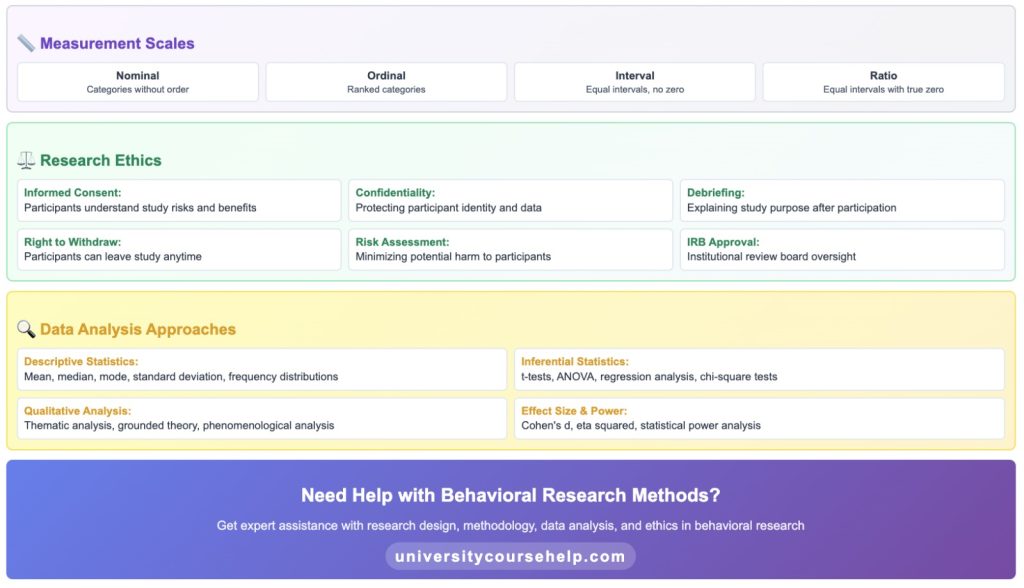
As behavioral research continues to evolve, its focus on foundational concepts remains pivotal. Whether in a classroom at Utah State University or a professional research setting, the importance of understanding the methods and their application cannot be overstated. Research drives home foundational concepts by providing students and researchers with the tools to design rigorous studies, collect meaningful data, and ultimately contribute to the growing field of behavioral science.
Introduction: Starting Your Journey in Behavioral Research
Every researcher’s journey in behavioral research begins with a solid introduction to the methods that guide their study. Whether you are just starting out in your psychology course or advancing in your career as a professor of psychology at California State University, understanding research methods is the first step toward producing meaningful work.
From the basics of experimental design to the intricacies of survey methods, “Methods in Behavioral Research” provides a thorough overview of all the techniques you’ll need to study human behavior effectively. By starting with these foundational concepts, you can build a strong base for advanced research and contribute valuable insights to your field.
In conclusion, methods in behavioral research are fundamental to understanding and analyzing human behavior scientifically. By accessing resources such as textbooks, ebooks, and journals, and learning from experts like Paul C. Cozby and Scott Bates, you are equipped with the knowledge and tools to succeed in your research journey. Whether you’re studying at Utah State University or conducting independent studies, mastering these research techniques will help you achieve success in the dynamic field of behavioral science.
Start Learning Behavioral Research Today! and gain the knowledge you need to conduct thorough and impactful studies!
Paper: Writing Behavioral Research Papers
When it comes to writing your paper on behavioral research, structure is key. In “Methods in Behavioral Research”, the authors guide you through the process of writing a research paper, from developing your research question to analyzing your results. The book emphasizes the importance of methodological clarity and data presentation, which are critical for making sure your findings are clearly communicated.
The paper you write based on these methods will form the foundation of your academic contribution to the field, helping to further behavioral research and contributing to the ongoing dialogue in psychology and other sciences.
Conclusion: Mastering Methods in Behavioral Research
Mastering the methods in behavioral research is essential for understanding and exploring human behavior scientifically. With textbooks like “Methods in Behavioral Research” by Paul C. Cozby and Scott Bates, students gain valuable insights into experimental design, data collection, and the application of research methods.
By leveraging resources like ebooks, university databases, and expert guidance, students can confidently tackle behavioral research, contributing to the growth of knowledge in psychology, behavioral science, and beyond.
Start Learning Behavioral Research Today! and explore behavioral research methods that will empower your academic journey!
FAQs about Methods in Behavioral Research: Paul Cozby Edition
1. What Are the Methods of Behavior Research?
Behavior research explores how humans and animals behave in various settings, and there are several behavioral science research methods used to gather data. The most common methods include experimental designs, observational studies, and surveys, all of which are discussed in detail in textbooks such as Methods in Behavioral Research (14th edition) by Paul Cozby and Scott Bates.
These methods provide the tools to understand behavior through controlled environments or natural settings. For example, an experimental approach might involve manipulating variables to observe outcomes in behavioral research, while observational techniques record behavior without interference, and surveys gather responses from large populations to understand trends.
- Experimental: Manipulating variables in a controlled environment to observe cause-and-effect relationships.
- Observational: Watching and recording behavior without interference.
- Surveys: Collecting self-reported data from individuals about their behavior or attitudes.
Behavioral research often combines these methods to achieve a comprehensive understanding of behavior, backed by the foundational concepts taught in textbooks like Methods in Behavioral Research (15th edition).
2. What Are the Three Commonly Used Research Methods in Behavioral Science?
In behavioral science, three commonly used research methods are experimental, correlational, and descriptive methods. Each method serves a unique purpose and provides different insights into human behavior.
- Experimental Methods: These involve manipulating one or more variables to observe the effect on other variables. This is a concise and strategic approach that helps determine causal relationships.
- Correlational Methods: These methods assess the relationship between two or more variables but do not establish cause and effect. Behavioral research using this method can help identify patterns and trends in behavior.
- Descriptive Methods: These include observational techniques, case studies, and surveys, which help gather detailed data on behavior without manipulating variables. The overview of these techniques is often provided in textbooks like Methods in Behavioral Research.
These methods in behavioral research provide essential tools for understanding complex behavior and are covered in depth in sources like Paul Cozby and Scott Bates’ textbook, which is widely used in universities for student learning.
3. What Are the Four Types of Research Methods in Psychology?
Psychology utilizes a variety of research methods to explore human behavior, and four major types are commonly employed:
- Experimental Research: In this method, researchers manipulate one or more variables to observe their effect on behavior. It’s often regarded as the gold standard for determining causality and is a key component of behavioral science research methods.
- Correlational Research: This approach measures the relationship between two variables without manipulating them. It’s used to identify patterns in behavior but does not establish cause-and-effect relationships.
- Descriptive Research: This includes case studies, observational research, and surveys, where researchers gather detailed descriptions of behavior in natural or controlled settings. It’s often the starting point for understanding complex phenomena.
- Qualitative Research: This involves gathering in-depth insights into behavior through interviews, focus groups, or open-ended surveys. Behavioral research using this method is focused on exploring attitudes, opinions, and experiences.
Each of these research methods is critical for different aspects of psychological studies. The methods in behavioral research outlined in Paul Cozby and Scott Bates’ textbooks provide a thorough examination of each approach, supporting students’ understanding of behavioral science research methods.
4. What Are the Three Research Methods Common to Research in the Behavioral Sciences?
In behavioral sciences, three primary research methods are widely used to study behavior:
- Experimental Method: This involves manipulating variables in a controlled setting to observe the effect on behavior. This approach is essential for behavioral research because it helps establish cause-and-effect relationships between variables.
- Observational Method: Researchers observe and record behavior in natural settings without intervention. This method allows for the study of behavior in its natural context, providing rich data on how individuals or groups behave in real-life situations.
- Survey/Questionnaire Method: This involves gathering data through questionnaires or surveys to understand attitudes, beliefs, or behaviors from large groups of people. This method is useful for collecting material on broad patterns of behavior in different populations.
Each method offers distinct advantages and insights into human behavior, and together they form a comprehensive toolkit for conducting behavioral science research. In books like Methods in Behavioral Research (14th edition) by Paul Cozby and Scott Bates, these methods are explained with clarity and examples, ensuring that students have a solid grasp of behavioral research.

