

UTA Research Paper Template: A Complete Guide for Academic Success
When it comes to crafting a high-quality academic paper at the University of Texas at Arlington (UTA), adhering to standardized formatting and citation rules is not optional—it’s essential. The UTA research paper template serves as a useful tool that helps students, particularly those new to scholarly writing, produce papers that align with university expectations and professional academic standards.
Whether you’re working on a small class paper or tackling the challenges of writing a thesis, understanding the structure and components of the UTA template can make the journey smoother. This post provides an in-depth look into the UTA research paper template, complete with examples, tutorials, tools, and explanations rooted in the APA 7th edition guidelines.
Document: What the UTA Research Paper Template Contains
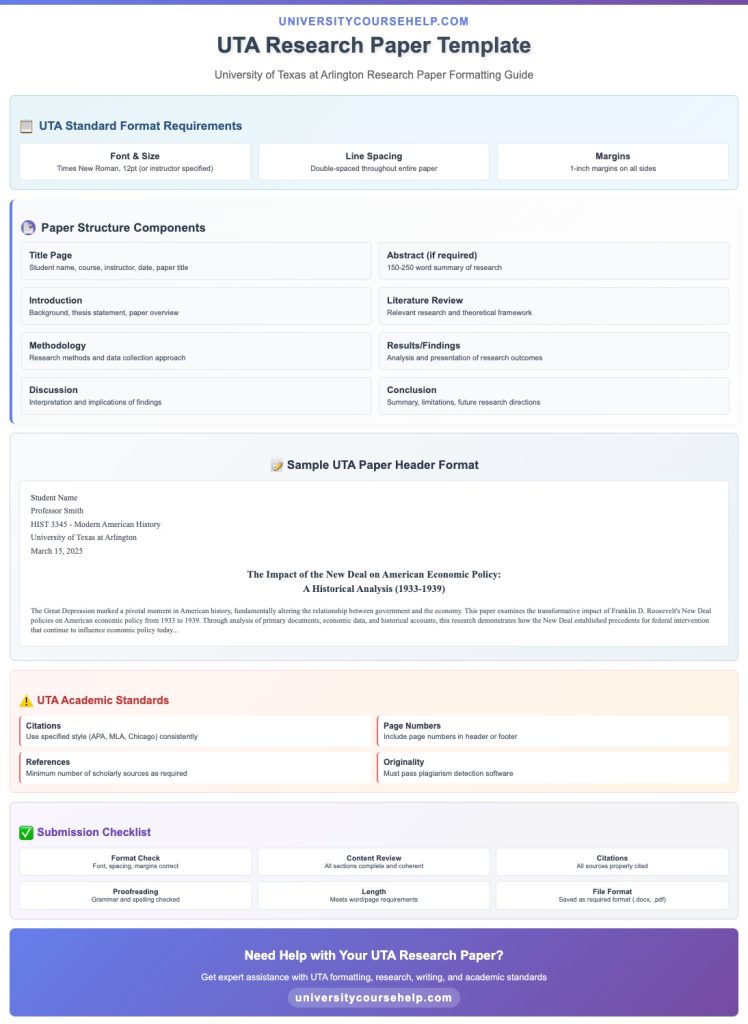
A research paper document based on the UTA template typically includes:
- Title page
- Abstract
- Main body with proper text structure
- In-text citations and reference page
- Tables and figures formatted as per the APA guidelines
The templates – UTA faculty have curated are designed to help students structure their work efficiently, maintaining academic integrity while reducing formatting guesswork.
APA: A Trusted Academic Formatting Standard
The UTA research paper template is predominantly based on the APA (American Psychological Association) style. This is particularly common across disciplines such as psychology, education, nursing, and social sciences.
UTA’s adoption of APA ensures uniformity and professionalism across research submissions. It supports clarity and concise communication in academic writing while maintaining rigorous standards for citation and reference management.
7th Edition: The Backbone of UTA’s Template Standards
The UTA research paper template strictly follows the 7th edition of the Publication Manual of the American Psychological Association. This edition of the publication manual brought notable changes from the previous version, including:
- The inclusion of up to 20 authors in the reference list
- A new format for DOIs and URLs
- More flexible font options
- Clearer rules for student papers vs. professional manuscripts
Understanding the paper example from the 7th and how it differs from previous versions helps students apply the correct structure.
Manual: Navigating the APA Guide for Accurate Formatting
The manual of the American Psychological Association is your best friend when writing academic papers at UTA. While the UTA template provides the framework, the manual explains the “why” behind each rule. It covers:
- Headings and subheadings
- Lists and bullet points
- Block quotes and indents
- Citation formats for different sources
A quick consult of the manual can answer lingering questions about formatting and details and exceptions.
Guideline: Adhering to Formatting and Citation Rules
Using the UTA template means adhering to formatting guidelines precisely. From line spacing to margin size and font choice, each element plays a role in ensuring the paper meets assignment instructions.
Some professors may provide guidelines that add additional specifications—such as word count or structural preferences—on top of the APA rules. These must be observed carefully to avoid unnecessary point deductions.
Style: Presenting Academic Content with Professionalism
APA isn’t just about citations—it’s a writing style. This includes tone, objectivity, tense usage, and avoiding bias in language. UTA templates embed these expectations, guiding students toward creating content that reads clearly and professionally.
When style experts demonstrate formatting in workshops or webinars, they often rely on these templates as a teaching base.
Need further research assistance?
Our team at UniversityCourseHelp.com is here to provide step-by-step tutorials and citation management support. Get the help you need to craft a flawless research paper today!
Citation: Giving Credit Where It’s Due
Citations are the backbone of academic integrity. The UTA template includes structured ways to reference all kinds of sources—from journal articles and books to websites and government documents. Each citation must correspond to a source in the reference list.
Whether citing an example from the 7th edition or a source from class readings, it’s essential to maintain consistency in formatting.
Citation Management: Streamlining the Process
For students who find it tedious to manage dozens of sources manually, citation management help is available through the UTA library and writing center. Mendeley is a free reference manager and is commonly recommended by UTA librarians.
This free reference manager allows students to:
- Import PDFs and citations automatically
- Generate references in APA 7th format
- Integrate with Word for in-text citations
If you need a tool to help, Mendeley or similar software offers a reliable solution.
Tool: Enhancing Your Workflow with Technology
Beyond Mendeley, UTA offers a variety of tools to help students stay on top of academic demands. These include:
- Templates – UTA faculty curated for each department
- Tutorials on using APA and Microsoft Word
- Research and writing assistance from the library
- Access to high-quality paper examples
By incorporating these tools, students can focus more on research and content creation, not formatting stress.
Tutorial: Learning Through Guided Practice
UTA’s tutorials are a powerful resource for mastering APA and research writing. Whether you’re watching a webinar or reviewing a step-by-step tutorial from the library website, these resources simplify complex tasks like:
- Formatting a running head
- Structuring references
- Building a title page
- Embedding tables and figures correctly
You’ll often find links to file downloads, including completed paper examples and guides for common issues.
Basics: Laying the Foundation for Success
Before diving into a major research project, students must understand the basics of academic writing. This includes:
- Proper paragraph and sentence structure
- Logical organization of ideas
- The correct use of text features like bold, italics, and heading levels
By starting with the basics, the rest—like formatting citations or creating a title page—becomes easier with the UTA template guiding your way.
Final Thoughts
The UTA research paper template is more than just a formatting convenience—it’s a bridge to academic excellence. Supported by the 7th edition of the publication manual, powered by effective tools and tutorials, and enriched by the guidance of style experts, this resource removes barriers and boosts confidence.
Still feeling uncertain? Try using the library for additional help, attend a webinar, or seek citation management help. No matter where you are in your academic journey, there’s always a solution waiting for you at UTA.
Need a sample template or paper example? Visit UniversityCourseHelp.com for direct download links, APA tips, and formatting support tailored for UTA students.
FAQs about UTA Research Paper Template: Arlington Thesis Paper Guide
1. How to set up a research paper template?
To set up a research paper template for your college or academic work, follow these steps:
- Start by downloading the 7th edition template provided by UTA faculty or use student paper examples from the APA guide for proper formatting.
- Make sure to adhere to paper formatting guidelines such as font, line spacing, and margins as per the American Psychological Association (APA) manual. These templates are structured to ensure that your paper meets the citation and reference list requirements.
- If you are writing a thesis or other extensive document, be sure to use a thesis template that includes guidance on formatting tables and figures, citations, and headings.
- Ensure page numbers are correctly placed, and citations follow APA format. You can download free reference management tools like EndNote, Mendeley, or Zotero to help organize your references and manage citations accurately.
2. What is the research status of UTA?
UTA (University of Texas at Arlington) is renowned for its diverse academic offerings, including research help across multiple fields such as social work, sociology, and psychology. UTA’s faculty regularly contribute to cutting-edge research in various domains, including marketing, nursing, and academic resource management.
The university provides resources such as staff resources for students looking to dive deeper into academic research. Access to online research papers, research databases, and the library is facilitated through UTA’s student portal. For guidance on citation management, UTA provides tools like Zotero, Mendeley, and EndNote, which are useful when adhering to the 7th edition APA guidelines.
3. How to submit college transcript to UTA?
To submit your college transcript to UTA, follow the procedure outlined by the admissions office on the official UTA website. You may need to upload the transcript in PDF format through your student portal or email it to the designated UTA office. It’s important to make sure the transcript adheres to any guidelines specified by UTA’s admissions office.
Ensure your transcript includes the necessary reference list of courses and grades that meet UTA’s requirements. Keep in mind that transcripts must be official, so follow all instructions for documentation submission to avoid delays in processing.
4. What is the email structure for UTA students?
The email structure for UTA students follows professional standards. Typically, a UTA student’s email address will include their name and student number, followed by the @mavs.uta.edu domain.
When sending professional or academic emails to UTA faculty or staff, it’s important to use a formal structure:
- Subject line: Clearly indicate the purpose of your email.
- Greeting: Use a respectful salutation such as “Dear [Faculty/Staff Name].”
- Body of the email: Keep the content concise and direct. Provide a clear context for your inquiry or request.
- Closing: Use a polite sign-off such as “Sincerely,” followed by your full name and student ID.
For any research-related queries, ensure you are also attaching any necessary documents such as research proposals, papers, or any other materials related to the request.

