

Minor Research Project: A Comprehensive Guide

A minor research project is an academic exercise that allows students to engage with original research within a defined scope, typically under the guidance of a faculty advisor or coordinator. It provides students with the opportunity to develop essential research skills, including critical thinking, data collection, and academic writing, all within a limited timeframe and topic range. This type of project is usually smaller in scale compared to a major research project and is often a mandatory component of a degree pro especially in undergraduate courses.
Overview of a Minor Research Project
A minor research project often focuses on a specific aspect of a broader research topic, aiming to address a research question that has been prescribed by the advisor or chosen by the student. The project generally involves a literature review, followed by data collection, and analysis of the findings. While the project may not require as much depth as larger-scale research, it still plays a crucial role in helping students learn how to carry out academic research and present their findings clearly.
The duration of a minor research project typically spans from two weeks to several months, depending on the course structure and intended learning outcomes. It allows students to familiarize themselves with the academic research process, evaluation, and methods for data analysis and reporting.
Learning Outcomes of a Minor Research Project
The learning outcomes of a minor research project are focused on equipping students with the necessary tools to conduct research effectively. Some intended learning outcomes include:
- Development of Research Skills: Students will acquire the ability to independently carry out a research project, from choosing a topic to writing a report and presenting findings.
- Critical Thinking: The process of analyzing and interpreting data sharpens the student’s ability to think critically about research findings.
- Scholarship and Professional Writing: Students gain experience in academic writing and are expected to adhere to scholarly standards including proper citation, formatting, and adherence to academic integrity (e.g., avoiding plagiarism).
- Data Analysis and Reporting: Through practical work, students learn to analyze data and report results effectively, a key skill in many academic and professional careers.
These generic skills gained from a minor research project provide a solid foundation for students, helping them pursue more complex research in the future, such as a thesis or major research project.
Outcome of a Minor Research Project
The outcome of a minor research project is typically a written report or presentation that outlines the findings from the student’s research. The completion of the project is often evaluated based on its originality, methodological soundness, and the clarity of its conclusions.
- The submission of the project typically includes a final report that highlights the research question, methodology, findings, and the student’s critical analysis.
- Students report on progress throughout the duration of the project, typically through consultation with their supervisor and regular feedback sessions.
The project serves as a capstone learning activity, laying the groundwork for students to engage in more substantial research activities, such as a major research project or thesis.
Intended Learning Outcomes and Achievement
The intended learning outcomes for a minor research project are designed to ensure that students achieve a certain level of proficiency in research techniques. These outcomes can include:
- Understanding Research Methodology: Students will gain an understanding of how to design a research project, choose appropriate research methods, and implement them effectively.
- Original Research: The project allows students to engage in original research, either through qualitative methods or by conducting an experiment. For example, a student might explore a theoretical or scientific problem and generate findings that contribute to a broader field of study.
- Critical Reflection: Upon completion of the project, students are expected to synthesise their findings and provide a well-reasoned discussion of the results.
- Final Report or Presentation: Students will often present their research findings in the form of a written report or oral presentation, demonstrating their ability to communicate complex ideas effectively.
Need help with your Minor Research Project?
At UniversityCourseHelp.com, our experts can guide you through every step, from selecting the right topic to submitting your final report. Whether it’s research design, data analysis, or writing, we provide tailored support to ensure your project meets academic standards. Contact us today to get started and make your research process efficient and impactful!
Submission Process and Evaluation
Once the minor research project is completed, students are typically required to upload their work to a university system or submit it to their advisor for evaluation. The submission process involves submitting the final paper, often along with supporting materials such as data sets or supplementary documents.
The evaluation is based on several criteria:
- Adherence to the research question and the clarity of the methodology
- The originality and practicality of the research
- The quality of data analysis and the soundness of conclusions drawn
- Structure and organization of the research report
How to Structure Your Minor Research Project
- Introduction: Provide an overview of the research topic, stating the research question and objectives of the study. This section should set the stage for the research and highlight its significance.
- Literature Review: Conduct a literature review to explore previous work in the research area, identify gaps in knowledge, and position your research within the existing body of work.
- Methodology: Detail the research methods you will use to address your research question. This section should describe the experimental design, data collection, and data analysis processes.
- Results and Discussion: Present the findings of your research, providing an analysis of the data and discussing its implications in the context of your research question.
- Conclusion: Summarize the key findings of your research, discuss their impact, and suggest areas for future research.
Generic Skills Developed Through a Minor Research Project
A minor research project provides students with the opportunity to develop a wide range of generic skills that are essential for academic success and future professional endeavors. These skills include critical thinking, research skills, data analysis, and the ability to effectively communicate research findings. Through the process of undertaking a minor research project, students also gain proficiency in academic writing, time management, and the ability to synthesize information from multiple sources.
As part of the minor research project part 1, students will focus on gathering and analyzing data related to their research topic. This process enhances the researcher’s ability to critically engage with literature, identify gaps, and propose solutions. Additionally, students will develop analytical skills by evaluating research methods, conducting data analysis, and applying theoretical frameworks to their findings.
Duration of a Minor Research Project
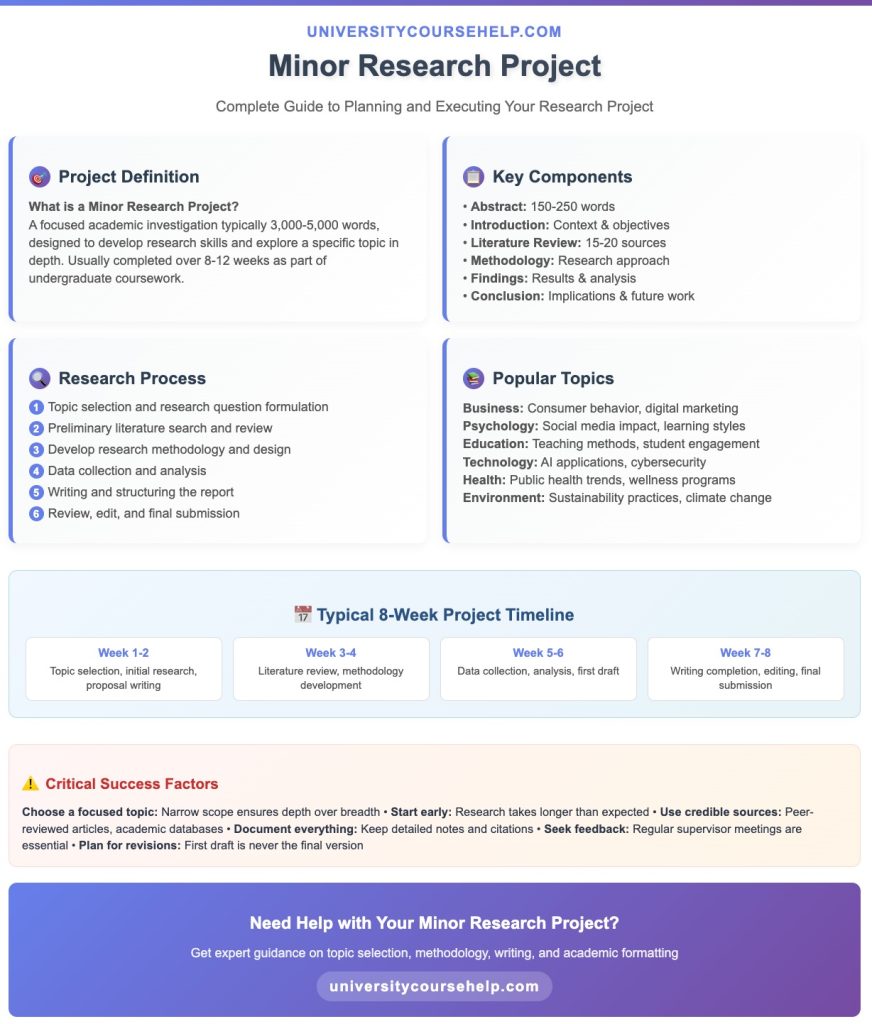
The duration of a minor research project typically spans at least two weeks but may extend up to several months, depending on the project’s complexity and scope. This flexibility allows students to organize their research process, plan their activities, and ensure timely completion of the project.
During the commencement of the project, students are expected to enroll in the course or module that oversees the research, setting a clear deadline for the submission of the final report. The duration of the research project as a capstone will vary depending on the specific faculty-supported disciplinary area and the nature of the exploration of a scientific problem. Whether students are conducting a theoretical study or working on a practical research project, the duration helps them manage their tasks and allocate sufficient time for research, data collection, and analysis.
Upload Process for Minor Research Projects
At the completion of the minor research project, students are typically required to upload their work to the institution’s online portal or submit it to the coordinator or faculty advisor. The upload process is a crucial part of the submission procedure, as it ensures that the research is recorded and reviewed.
Students are often asked to provide a template or follow specific format guidelines when preparing their research paper or report. This ensures that the project meets the academic standards expected by the institution and follows the prescribed format for citation, referencing, and presentation. Additionally, students may be required to submit supplementary materials such as data sets, research logs, or journal entries documenting their progress throughout the project.
In minor research projects, effective upload practices ensure that all work is submitted before the deadline and is accessible to faculty for review. The upload process may also include the submission of a final draft after incorporating any feedback or revisions suggested during consultation with the supervisor.
Conclusion
A minor research project is an invaluable opportunity for students to gain firsthand experience in the research process, enhancing their skills in critical thinking, data analysis, and academic writing. Whether the project is part of a coursework requirement or serves as an introductory capstone learning activity, students benefit from gaining a deeper understanding of their chosen field while contributing to the broader academic community.
If you are a student needing assistance in structuring or writing your minor research project, or if you want to ensure that your research paper meets high academic standards, reach out to UniversityCourseHelp.com for expert assistance and support.
FAQs about Minor Research Project: Best Tips, Handbook and Examples
What is a Minor Research Project?
A minor research project is typically a smaller-scale research endeavor that students undertake as part of their academic requirements. Unlike a major research project or thesis, it focuses on a more specific research topic and is usually less complex in its methodology. The duration of a minor project is shorter, often with a more concise timeline for completion. The outcome of a minor project involves original research or exploration of a research problem within a defined scope, often including a literature review, data analysis, and the drawing of conclusions.
What are Examples of Research Projects?
Research projects can vary greatly depending on the field of study. Examples may include:
- Minor Research Project:
- A student may explore a scientific problem, conducting a modest original experiment or reviewing existing literature to analyze a research question and draw conclusions.
- Major Research Project:
- This might involve a deeper, independent research project with extensive methodology, such as conducting quantitative analysis on a research problem, culminating in a thesis or capstone project.
- Practical Research:
- In fields like science, students may experiment in a laboratory setting or explore trends in current scientific literature to synthesise findings and contribute to the research community.
What is Meant by Minor Project?
A minor project refers to a smaller-scale research task compared to its major counterpart. The research question and methodology for a minor research project are usually more straightforward. Students are expected to consult with their advisor or supervisor and submit their findings as part of their academic development. This type of project focuses on developing research skills, critical thinking, and understanding research methods in a more controlled setting, offering students a chance to undertake independent research on a specific or modest problem.
What is the Difference Between Major and Minor Research Projects?
The difference between a major and minor research project lies primarily in scope, complexity, and duration. A major research project often serves as a capstone learning activity, involving original research, extensive data analysis, and the presentation of findings in a detailed thesis format. The researcher works independently but may collaborate with faculty members or colleagues for broader insights.
On the other hand, a minor research project is typically smaller, with a more concise focus and shorter duration. It usually does not require the same level of original research but may involve a literature review, a smaller-scale experiment, or the analysis of existing data. The completion of the minor project is part of the academic learning outcomes for a course and often serves as an introduction to the more comprehensive major project or thesis.
In summary:
- Major Research Project: In-depth research, extensive methodology, often a thesis, longer duration.
- Minor Research Project: More focused, shorter duration, limited scope, possibly qualitative research or data analysis, smaller outcome.
These differences highlight the importance of each type of project in a student’s academic journey, offering the opportunity to develop research and analytical skills that can be applied in future academic and professional endeavors.

