

An In-Depth Guide to Crafting a Speech Outline
A speech outline serves as the backbone of any speech, providing a clear and structured framework for the speaker to organize their thoughts and ideas effectively. Whether you’re preparing for a persuasive speech, an informative presentation, or any other type of public speaking event, a well-crafted outline is essential to ensure your message is conveyed clearly and confidently. In this blog post, we will dive into the definition of a speech outline, the key components involved, and practical examples to guide you through the process.
What is a Speech Outline?
A speech outline is a blueprint or plan that organizes the key points, arguments, and supporting content of a speech in a logical and coherent structure. The purpose of the outline is to help speakers stay organized and maintain a smooth flow of information. By breaking down the speech into sections, such as the introduction, body, and conclusion, the outline helps the speaker focus on the most important aspects of their message while ensuring they don’t miss any critical points.
In essence, a speech outline provides a roadmap for the speaker, ensuring that the audience can easily follow the ideas being presented. It also ensures that the speech stays on track and stays within time constraints, making the speech more effective and engaging.
Key Components of a Speech Outline
An effective speech outline includes several key components that guide the structure of the speech. These components ensure that the speech is well-organized and impactful. Here are the key sections of a typical speech outline:
- Introduction
The introduction is the first section of your speech, and it’s crucial to capture the audience’s attention. In this part of the outline, you’ll include:- Opening hook: A captivating sentence or question that grabs attention.
- Purpose of the speech: A clear statement about what the speech will achieve.
- Thesis statement: A concise statement of the main argument or purpose of the speech.
- Overview: A brief outline of the main points you’ll cover.
“Did you know that over 1 million plastic bottles are purchased every minute worldwide? Today, I will discuss the environmental impact of plastic waste and how we can make a significant change by adopting sustainable practices.” - Body (Main Points)
The body of your speech contains the main points that support your thesis. This section should be clearly structured and divided into sub-points to elaborate on each main idea. A typical structure includes:- Main point 1: The first key point you want to make.
- Supporting evidence or examples.
- Main point 2: The second key point.
- Supporting evidence or examples.
- Main point 3: The third key point.
- Supporting evidence or examples.
“In this section, I will outline the three primary ways in which plastic waste harms our environment: pollution of oceans, harm to wildlife, and the long-term impact on climate change.” - Main point 1: The first key point you want to make.
- Conclusion
The conclusion wraps up your speech by summarizing your main points and leaving a lasting impression on the audience. In this section, you will:- Summarize the key points: Briefly revisit the main arguments of the speech.
- Call to action: Encourage the audience to take action or consider the issue further.
- Closing statement: A final remark that leaves the audience thinking about the topic.
“To conclude, the fight against plastic waste is not just an environmental issue but a call for change in our daily habits. I urge you all to reduce your plastic consumption, opt for sustainable alternatives, and contribute to a cleaner planet.”
Introduction: How to Begin Your Speech Outline
When crafting a speech outline, the introduction plays a crucial role in grabbing the audience’s attention and setting the stage for the rest of the presentation. This is where you tell the audience what to expect and establish the tone of your speech. An example of an outline of speech typically starts with an attention-getter (a quote, fact, or question), followed by a clear thesis statement or purpose. For instance, a well-written informative speech preparation outline example would include an introduction that briefly introduces the topic and explains its importance to the audience.
Looking to create a compelling and well-structured speech?
Let UniversityCourseHelp.com assist you in crafting a detailed speech outline that will captivate your audience and leave a lasting impact. Our experts are here to help you organize your thoughts and deliver an outstanding presentation. Get started today!
Create a Well-Structured Speech Outline
A well-organized sample speech outline is the foundation of a successful presentation. It ensures that your speech is easy to follow, your ideas are clear, and your arguments are well-supported. To create an effective speech outline, begin by structuring your content into main points and sub-points, which logically flow from one to the next. For example, you could organize an informative speech outline to discuss a topic step-by-step, breaking down the content into digestible chunks that your audience can easily comprehend.
Site Your Sources and References
In your speech outline, it’s important to include any references or sources you plan to cite during your speech. This ensures that your information is credible and your audience knows where to find more details. If you’re using online resources, make sure to mention the site where the information can be accessed. Referencing reliable sources helps establish your credibility and provides the audience with the tools to explore the topic further if they are interested.
By ensuring your outline includes these elements, you can create a well-structured and compelling speech that keeps your audience engaged.
Types of Speech Outlines
There are several types of speech outlines depending on the nature of the speech you are preparing. The most common types include:
- Informative Speech Outline
An informative speech outline aims to educate the audience on a specific topic without persuading them to take any action. It is structured to present facts, data, and information in a clear and organized manner. Example:
An outline for a speech on “The Importance of Renewable Energy” might include:- Introduction: Explain what renewable energy is and its importance.
- Body: Discuss the types of renewable energy (solar, wind, hydro) and their benefits.
- Conclusion: Summarize the impact of renewable energy on reducing carbon emissions.
- Persuasive Speech Outline
A persuasive speech outline is designed to convince the audience to adopt a particular viewpoint or take specific action. It includes compelling arguments, supporting evidence, and appeals to the audience’s emotions and logic. Example:
An outline for a persuasive speech on “Why Recycling Should Be Mandatory” might include:- Introduction: Present the problem of waste and the need for recycling.
- Body: Provide statistics on waste production, environmental impact, and the benefits of recycling.
- Conclusion: Urge the audience to support legislation for mandatory recycling programs.
- Special Occasion Speech Outline
This type of speech outline is used for speeches given on special occasions such as weddings, funerals, or ceremonies. The tone is often personal, and the focus is on celebrating or commemorating the event. Example:
An outline for a wedding speech might include:- Introduction: Thank the guests and introduce yourself.
- Body: Share a personal story about the couple or your relationship with them.
- Conclusion: Wish the couple happiness and express your best wishes for their future together.
Examples of Speech Outline Templates
Here’s an example of a speech outline template you can follow for any type of speech:
- Introduction
- Attention getter (quote, question, fact)
- Purpose statement
- Thesis statement
- Preview of main points
- Body
- Main point 1
- Sub-point 1a
- Sub-point 1b
- Main point 2
- Sub-point 2a
- Sub-point 2b
- Main point 3
- Sub-point 3a
- Sub-point 3b
- Main point 1
- Conclusion
- Summary of key points
- Call to action (if applicable)
- Closing statement
This speech outline example is a great starting point for structuring your speech logically and effectively. Adapt it based on the type of speech and the specific audience you are addressing.
Tips for Writing an Effective Speech Outline
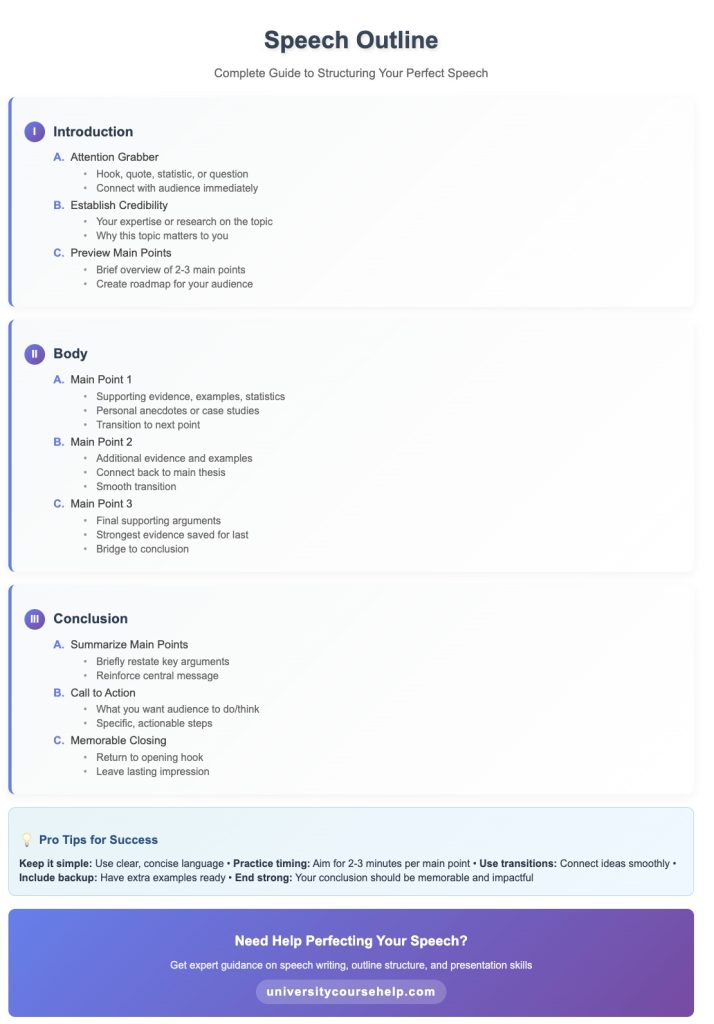
- Be Clear and Concise: A good speech outline should clearly define each section and be concise. Use bullet points for easy reference during your presentation.
- Use Transitions: Ensure your speech outline includes transitions between main points. This helps the audience follow your ideas smoothly.
- Focus on Your Message: Keep the audience in mind when selecting your main points and sub-points. Make sure each section contributes to your overall message and thesis.
- Practice: After creating your outline, practice delivering your speech. Familiarity with your outline will help you speak confidently and stay on topic.
Conclusion
A speech outline is essential for organizing your thoughts, ensuring clarity, and delivering a well-structured presentation. Whether you’re preparing for a high school or college speech, a strong outline can make all the difference in your performance. By following a logical structure—introduction, main points, and conclusion—you can create a speech outline example that will guide you toward crafting an impactful speech.
If you’re looking for more detailed help on writing your speech, or need guidance on how to write a speech outline, consider consulting our professional speech writing services at UniversityCourseHelp.com. Our experts can help you structure and write the perfect speech for any occasion.
Get started with your speech writing today!
FAQs about College Speech Outline: Public Speaking Outline Tips & Examples
What is the Outline for a Speech?
An outline for a speech is a blueprint that helps you organize and structure the main ideas, arguments, and supporting content in a logical manner. It serves as a guide for the speaker, ensuring that the presentation flows smoothly and that key points are covered. For example, a persuasive speech outline will highlight the main points in support of a stance, followed by evidence and conclusions. Whether you’re delivering an informative speech outline example or preparing for a cultural artifact speech outline symbols, the outline ensures clarity and coherence.
What are the 7 Parts of the Speech Outline?
The 7 parts of the speech outline generally include:
- Introduction – The opening of your speech, where you introduce the topic and grab the audience’s attention.
- Thesis Statement – A clear statement of your main idea or argument.
- Main Points – The central arguments or ideas you’ll discuss. These are the foundation of your speech.
- Sub-Points – Supporting details or evidence for each main point.
- Conclusion – Summarizes your speech and ends on a strong note, leaving a lasting impression.
- Transitions – Guide the audience from one idea to the next.
- Call to Action (if applicable) – If it’s a persuasive speech outline, include a call to action or a compelling statement encouraging the audience to think or act differently.
How Do You Write a 5-Minute Speech Outline?
To write a 5-minute speech outline, you need to focus on brevity and clarity. Start with a clear introduction, then quickly move into 2-3 main points that are central to your argument or information. For example, in an informative speech outline, prioritize the most important content to make your message clear. An informative speech outline template example can help, as it gives a structure where you simply insert your main ideas and supporting details. Ensure that your end has a concise summary or closing statement, reinforcing your key message. Practice delivering the speech to stay within the time limit.
How Do I Structure My Speech?
To structure your speech, start by clearly defining your main points and breaking them down into logical sections. Use an introduction speech outline to introduce the subject and state your purpose. For example, in an informative speech outline, include a brief explanation of what your audience should learn or understand by the end. When preparing, make sure to focus on the audience and their level of understanding, using examples or stories that will resonate with them. Be sure to end with a strong conclusion that ties everything together, creating a lasting impression on the listener. For more detailed guidance, an example of an outline of speech can provide you with a clearer roadmap for your own writing.

